AIV Office & DMS Integration: Real-World Project Insights
04/11/2026

Observation: Data Clutter Is Consuming Staff Time
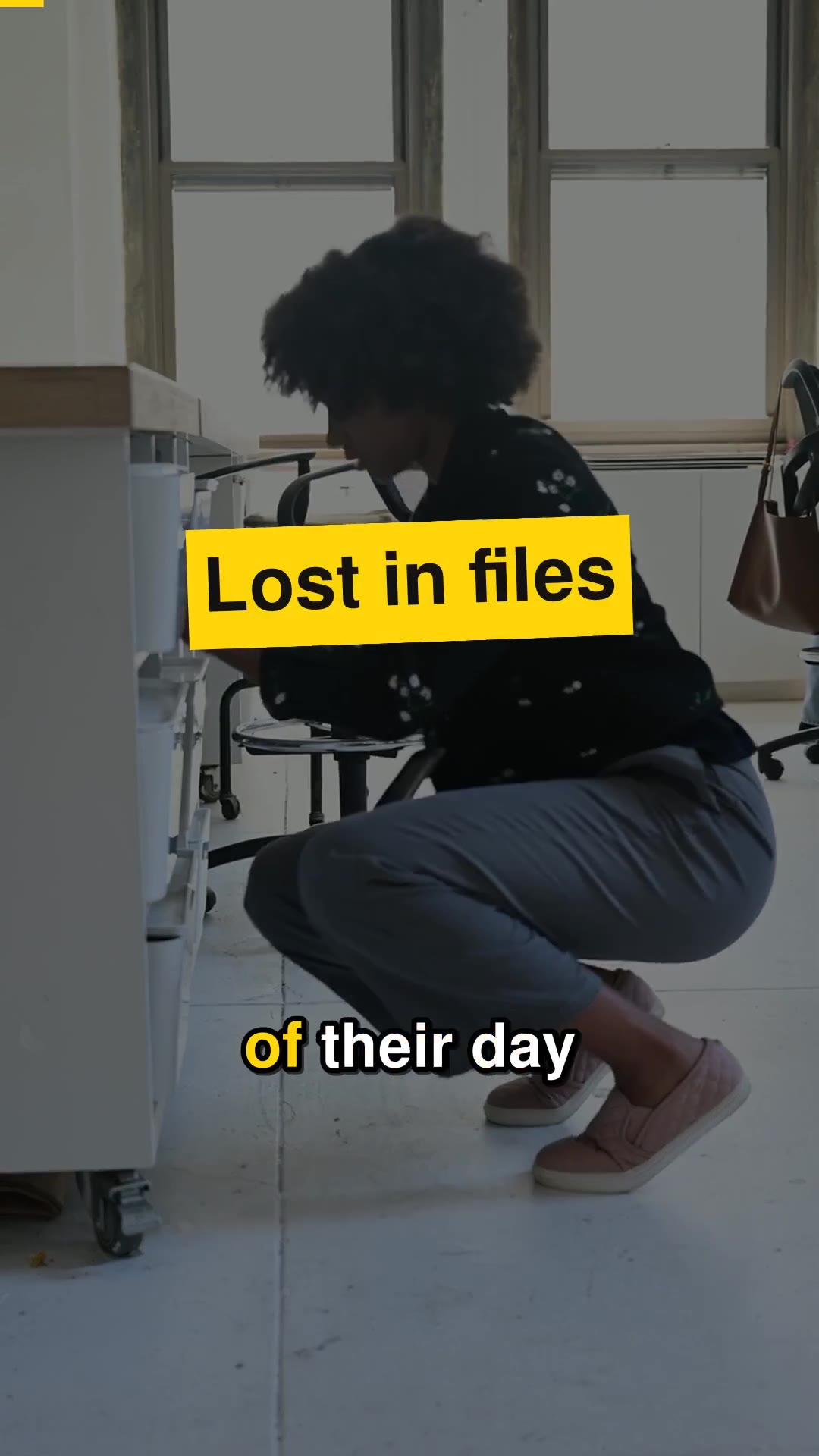
After working with numerous factories and retail chains from Vietnam to the Philippines, we have noticed a common trend: text-based data is doubling every year, but human retrieval capabilities are not. Office staff often spend about one-third of their time just locating files and cross-referencing information across departments. This is not a software shortage issue, but rather a result of systems existing in silos.
With AIV Office, we are not selling a new office application. We are selling the ability for the AI assistant Hanna to understand the context of your internal data. However, for Hanna to be truly useful, it must be able to 'see' into your existing Document Management System (DMS) or archive. This is where the technical and governance challenges begin to intensify.
Decision Point One: Open API or Direct Connection?
The first and most critical decision is how AIV Office accesses data. There are two main approaches. The first is building an open API, allowing Hanna to call data from external systems such as SharePoint, Oracle WebCenter, or internal DMS platforms. The second is deep integration, where AIV Office becomes the primary interface, and the legacy DMS serves only as a storage backend.
The trade-offs here are clear. If you choose an open API, you maintain the independence of your legacy system, but you must bear the development and maintenance costs of the bridge. If you choose deep integration, the user experience is more seamless, but the risk regarding compatibility is very high. In a recent project at a factory in Thailand, we chose the open API because their DMS had been running for 10 years and could not be upgraded. As a result, Hanna took an additional 200 milliseconds to respond, but in return, we did not have to touch the core infrastructure. Sometimes, being slightly slower is the price you pay to avoid crashing the system.
Decision Point Two: Hanna's Access Rights
Many people ask: Does Hanna have read access to all documents? The answer is no. And this is a point that other consulting firms often gloss over.
In AIV Office, Hanna's access rights are inherited from the user account. If you are an accountant, Hanna only sees financial files. If you are an engineer, Hanna only sees technical documents. This is extremely important for security, but it also creates a performance barrier.
Issues arise when departments need to collaborate. For example, an R&D department may need to reference a financial report to adjust a project budget. If the R&D account does not have read access to the financial file, Hanna will reject the query. At this point, you have two options: grant temporary permissions (high security risk) or ask the Finance department to summarize the data and send it via Chat in AIV Office. We recommend the latter. It is slower, but more transparent. 'Bypassing' access barriers using AI is a security loophole that no enterprise should accept.
Decision Point Three: Metadata Quality
Hanna does not know what a document is if the file name is 'Untitled.docx' and there is no description. This is a harsh reality in most Vietnamese enterprise data repositories. Employees create files, name them randomly, and forget about them.
For AIV Office to work effectively, you need a metadata cleansing process. We cannot 'force' Hanna to guess the names of your old files. The solution is to require employees to fill in titles and tags when saving files to AIV Drive or when syncing from legacy systems. Initially, this was the biggest source of complaints. But after three months, when everyone realized they were saving time on searches, compliance increased significantly. Some enterprises choose to use AI to automatically suggest tags based on content, but the accuracy is only about 80%. The remaining 20% error rate is enough to cause serious confusion in business decisions. Therefore, humans must remain in the confirmation loop.
Unresolved Issues and Next Steps
We are honest that there are still issues that have not been fully resolved. First, the ability to understand context in specialized technical documents across multiple languages is still limited. Hanna handles Vietnamese and English well, but mixed technical terminology (code-switching) can sometimes cause noise. Second, the cost of vector database storage for large data volumes is increasing rapidly. For enterprises with data repositories exceeding 100 terabytes, this cost can become a financial burden without a data tiering strategy.
What else do you need? A strong internal technical team to maintain the connection APIs, and a strict data governance policy. AIV Office is not a magic wand that erases data clutter. It only amplifies the value of clean data. If your data is messy, Hanna will give you messy answers. This is a reality we have experienced in many projects, and it is a reminder for anyone preparing to embark on this journey with AIVISION.
There is more here than one article can hold. Keep reading on the AIVISION blog, look at our display scoring solution, or get in touch.