PPE AI Camera Monitoring: Factory Alert Workflow
01/10/2026
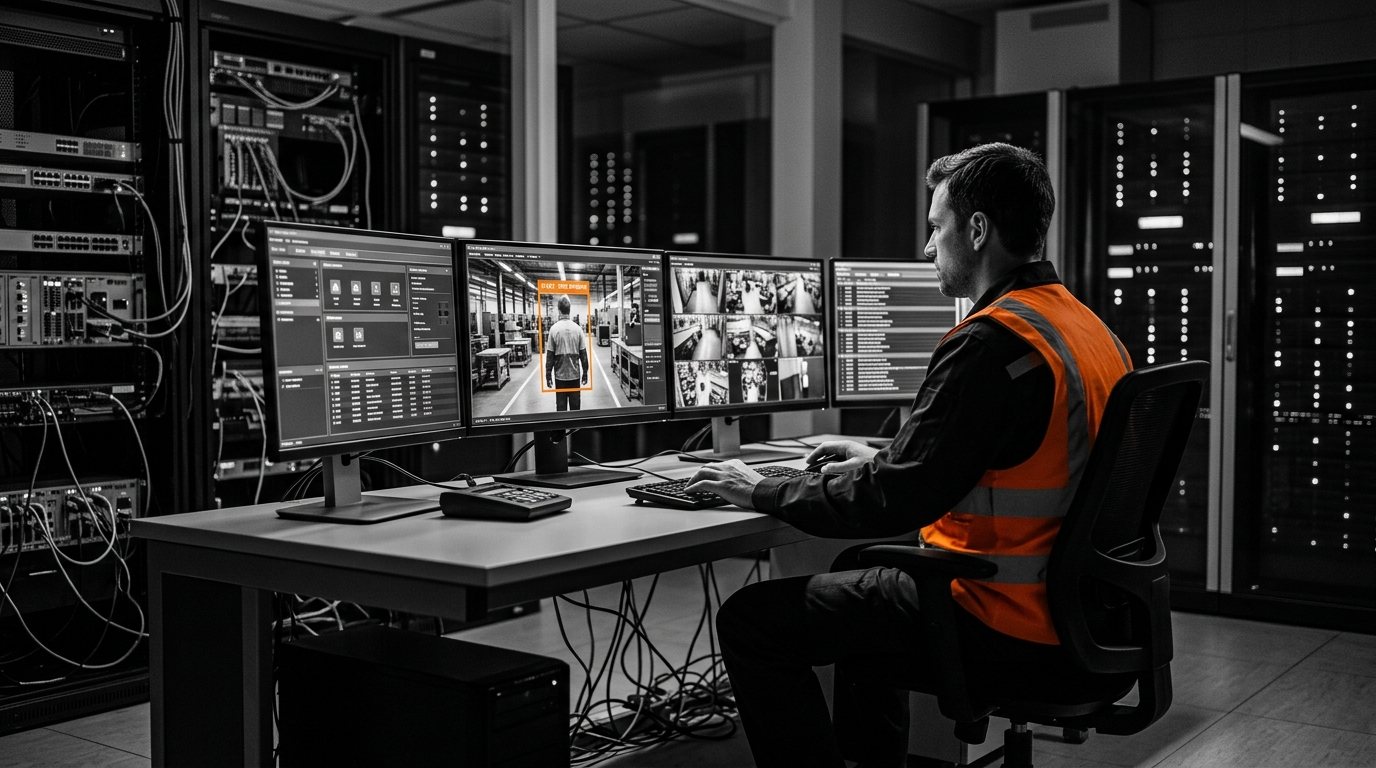
The Misconception of "Automated Monitoring" and the Passive Trap
Many operations managers, upon hearing about AI Cameras or computer vision, immediately picture a "mindless" system that runs itself, catches errors, and penalizes employees without human intervention. They assume that simply mounting cameras on the ceiling and turning on the software is enough. This is the most common misconception we encounter when consulting manufacturing plants in Vietnam, as well as partners in Mexico and the Philippines.
Deployment reality shows the opposite. AI does not replace the supervisor; it replaces the human act of "watching." The passivity stems from companies attempting to use AI to replace the entire violation handling process, rather than just the detection phase. When a worker forgets a hard hat or removes gloves, the AI Camera detects it. But deciding whether to penalize, how to remind them, or if it is an exception due to equipment failure is a human task. If you allow AI to automatically deduct pay or send reprimand emails without a review layer, you will face fierce employee resistance and privacy complaints. This article dissects the PPE (Personal Protective Equipment) monitoring workflow along a realistic timeline, from preparation to stable operation, so you can clearly see the bottlenecks and what AI can actually do.
Before Installing AI Cameras: Identifying the "Blind Spots" in Your Process
In the preparation phase, the biggest mistake is installing cameras before clearly defining the business process. Many factories install dozens of cameras everywhere but do not know who receives the alerts or who is responsible for handling them. This is a typical bottleneck.
We usually start by walking through the workshops. For example, in a factory producing instant noodles or beer, wearing hats and gloves is mandatory when in direct contact with the production line. However, in reality, employees often remove their gloves for 5-10 minutes during shift changes or machine cleaning. Under the old process, a safety officer had to patrol continuously. If they did not pass by at the right moment, the violation would be missed. When an incident occurred, they had to review footage (if available) to find evidence. This process is slow and depends entirely on the consistency of the patrol officer.
At this stage, the role of AI is to redefine "when an alert is needed." We do not need AI to detect every behavior, only high-risk states: no hard hat, no safety glasses, or standing in a restricted zone. At AIVISION, when deploying AI Cameras for companies in the lubricant industry or Masan, we always require clients to have a clear alert handling process before integrating the software. AI is just a "wide-open eye." Processing the information that eye sees remains within the human process.
During Deployment: AI Cameras and the Role of Computer Vision in Real-Time
When the system begins trial operation, we face the biggest challenge: latency and accuracy. A PPE alert is only meaningful when it reaches the person in charge before an accident occurs or immediately after the violation. If the alert arrives 10 seconds late, it is only useful for post-incident review, not prevention.
Here, the real-time image/video processing capability of Computer Vision is evident. With the infrastructure AIVISION operates, processing speed can reach thousands of images per second, ensuring a committed latency of under 1 second. This means that when an employee enters a danger zone without gloves, the notification appears on the control screen or the workshop manager's phone almost instantly.
However, this is also when human intervention is most critical. AI will have "laughable" moments, such as mistaking an employee's handbag for a hard hat, or a shadow on the floor for a person. This is the model retraining phase. The technical lead needs to mark these errors so the system can self-learn. We often encourage on-site managers (including partners in Thailand and the Philippines) to participate in this labeling process. They understand the real-world context better than any AI engineer. For example, an employee bending down to fix a machine might temporarily remove their mask; this is acceptable in specific procedures. AI needs to learn to distinguish between "safety violations" and "necessary technical operations." This is the best place to leave things to humans: defining exception contexts.
After Live Operation: Data Governance and Safety Culture
Once the system is running stably, the issue is no longer technical but managerial. AI Cameras generate a massive amount of alert data. Without a filtering mechanism, managers will be overwhelmed by notifications and will turn them off, reverting to the old status quo. The bottleneck here is human information processing capacity.
We propose an alert classification mechanism. Serious errors (entering restricted zones, no hard hat in cutting areas) are prioritized at the highest level, accompanied by on-site audio alerts if necessary. Minor errors (forgetting gloves for a short time) are aggregated into daily reports for the safety officer to summarize. This approach helps humans focus on what is truly dangerous, rather than reacting to every blink on the screen.
Safety culture also changes. When employees know there is an AI "eye" always watching, they are often more self-aware. But more importantly, when managers use AI Camera data to retrain employees fairly, based on clear visual evidence, they perceive objectivity. No more "you see, I saw you not wearing a hat." Instead: "Here is the photo at 10:32 AM, can you explain why you weren't wearing a hat then?" This transforms monitoring from a punitive action into a tool for improving work efficiency.
Finally, it must be emphasized that AI Cameras are not a standalone solution. They are a link in the occupational safety management system. If the human process is weak, AI only makes that weakness more visible and faster. If the human process is strong, AI will be a lever to double monitoring efficiency without adding more patrol staff.
Final verdict: In the era of computer vision, the value of a manager does not lie in "monitoring more," but in "processing information more accurately." AI handles the seeing; humans handle the decision-making.
If you are considering a similar use case, the AIVISION team can sit down with you to break down the scope before you spend a single dollar. Explore our AI services or schedule a consultation.