Pharmacy chatbots and retail chains: designing for safety
01/10/2026
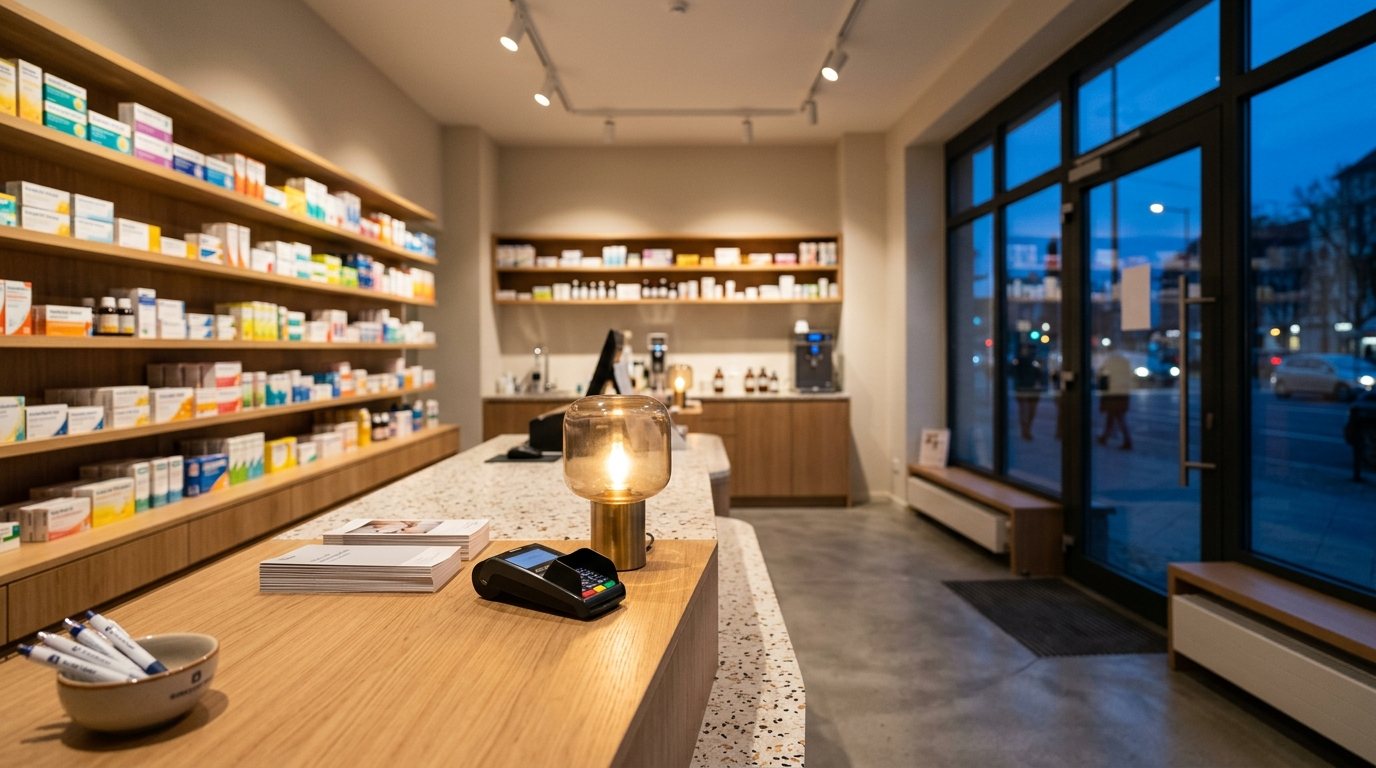
It is nine at night, the pharmacy is about to close, and the pharmacist's phone rings for the eleventh time this evening: is this item in stock, what time do you close, do I need any paperwork to buy this. Most of these calls need no pharmaceutical expertise. They need somebody to answer quickly. That is where a pharmacy chatbot can step in, provided it is designed to know where to stop.
At AIVISION we build Vietnamese language models and fine-tune them for pharmaceutical use. When retail chains ask about chatbots, their shared concern is selling faster. Ours is that the chatbot does no harm. The two do not conflict, but the second has to come first.
What a chatbot should do
Think of it as a new employee who is very fast and never tired, but has not been given authority to give professional advice. The list of suitable tasks is fairly clear.
- Answer store information: address, opening hours, nearest branch, delivery options.
- Look up products in the catalogue: stock, pack size, brand, the organisation's listed price.
- Re-present label and leaflet content exactly as the source document has it, with citations.
- Explain procedures: orders, returns, loyalty points, what is needed to buy a prescription-only item.
- Support staff: internal lookup and drafting replies for a real person to approve.
Notice what is missing. No diagnosis by text message. No suggesting what to take for pain, cough or tiredness. No dosing advice. No promise that a product works. No comparing products in the style of this one is better for your condition.
Safe design starts with refusing
It is easy to teach a chatbot to say a lot. It is harder to teach it to say no at the right moment. I believe the quality of a pharmacy chatbot lies more in how it declines than in how it answers.
Recognising questions across the line
Customers rarely ask directly. They tell a story: my child has had a fever for a few days, what should I buy? Or: my grandmother takes several things already, is adding this one a problem? The system must recognise questions that sit in professional territory even when no obvious keyword appears, and redirect them kindly, not curtly.
Handing off to a person
A refusal that leaves the customer hanging makes them annoyed, and they go looking for answers somewhere less safe. The chatbot should have a clear route onward: connect to the store's pharmacist, suggest visiting in person, and where there are signs of an emergency, advise contacting a medical facility or emergency services. These phrases should be written by the organisation's pharmacists, not by the engineering team.
No inventing when there is no document
Answers about products must come from the organisation's document store, and when nothing is found the chatbot says nothing was found. This calls for a retrieval architecture, not just a good model. A model that writes well and is left unsupervised is the one most likely to improvise.
Selling, and professional ethics
There is a very real temptation in retail chatbot design: let the bot push products. Suggest add-ons, stress promotions. For ordinary consumer goods that is normal. For pharmaceuticals the line is much thinner. A chatbot should not use wording that makes a customer believe a product will solve their health problem, and should not create buying pressure from anxiety.
I am not saying never recommend a product. I am saying that recommendation content in this field should be vetted by someone qualified and checked against advertising rules, and should lean neutral rather than persuasive. This is where the deploying company needs to sit down with its legal team, because rules on advertising medicines and health supplements differ by product category and change over time.
Security and customer data
A customer messaging a pharmacy chatbot may reveal health information about themselves or a relative without realising it. Chat logs are therefore sensitive data. Set clear rules: how long they are kept, who can read them, whether they are used for retraining, and if so, anonymised first. A short notice at the start of the conversation saying the chatbot is software, not a pharmacist, is both honest and a layer of protection.
How to know it is behaving
Test before opening to customers. The organisation's pharmacists write a set of tricky questions: symptom stories, dosage questions, interaction questions, attempts to coax the chatbot into saying what it must not, misspelled and unaccented messages. Run each and see how it responds. After launch, monitor conversations handed to humans and answers given with high uncertainty, because those are the points most in need of improvement.
To be honest, we have no handoff rate or satisfaction figure to show, and we will not invent one. Metrics like that only mean something when measured at a specific chain with its own customers.
About our capability
AIVISION trains on a cluster of 24 NVIDIA H200 GPUs and 8 NVIDIA B300 GPUs, has released the L1.0 LLM for Vietnamese, and does fine-tuning for fields such as healthcare and pharmacy. Our design direction for a pharmacy chatbot is this: a model that understands everyday Vietnamese, including unaccented text and abbreviations; product content drawn from the organisation's document store; advice boundaries set by the organisation's pharmacists; and always a route to a real person.
Back to the pharmacist on call number eleven. If the chatbot handles the questions about opening hours and stock, and passes the ones that need expertise to her with context attached, then on call number twelve she has more time to listen properly. It is a modest yardstick, and I believe it is the right one.