Deploying AI Office Assistants: Lessons from Manufacturing
26/11/2026
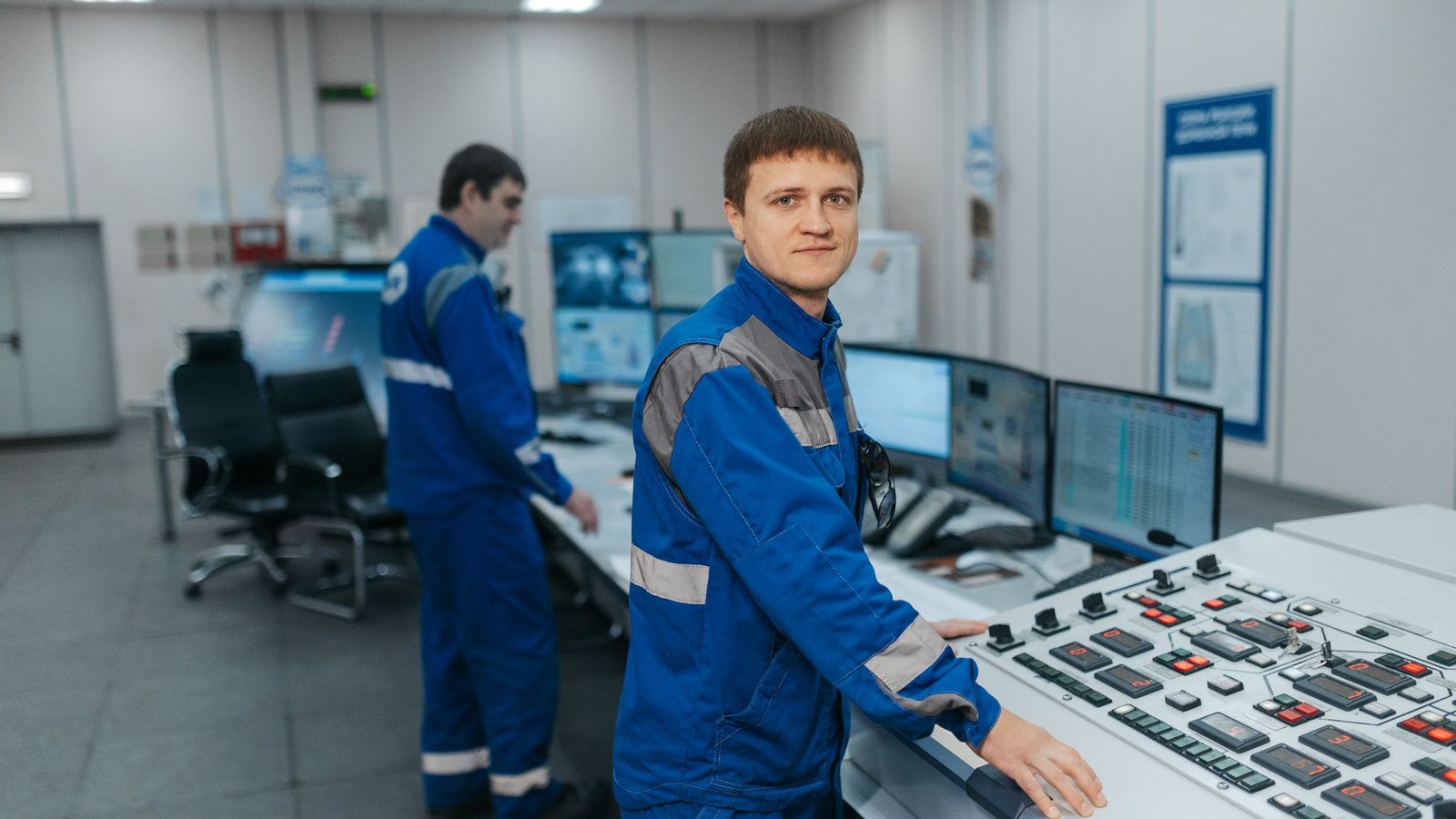
Almost a year ago, I was sitting in a second-floor meeting room at a food processing plant in Binh Duong. Across from me was the operations director, sighing because inventory reports and production plans were still being manually compiled from dozens of scattered Excel files. The story began there, a typical problem faced by many businesses in Vietnam and neighboring markets like Thailand and the Philippines: there is plenty of data, but a lack of knowledge.
Many people ask me where to start with deploying an AI office assistant. The answer is not simply "everywhere at once." When accompanying AIV Office deployment teams, we realized that choosing the right starting department determines 80% of the project's success. This article is not a marketing piece, but a recount of the painful filtering process of choices in reality.
Fork in the Road #1: Choose where the data "hurts" the most
Many businesses tend to choose Human Resources or Marketing to start because it sounds easier. But in reality, these are the areas with the most exceptions. If you choose a department that works on intuition or has unstandardized processes, the AI assistant Hanna will quickly get bogged down in ambiguous questions. We have seen situations where employees asked Hanna about an internal policy the system had not been trained on, and while the result returned was technically correct, no one dared to use it for fear of being wrong.
In this project, the decision was made to start with the Materials Planning department. The reason was very pragmatic: this is where data is clearly structured, processes are repetitive, and time pressure is high. A photo of the warehouse or an import/export report file can be summarized and analyzed immediately. What is the trade-off? You will not see an immediate "wow" effect like using a chatbot to draft fun emails. Instead, you gain reliability. When department heads see that Hanna never fabricates inventory figures, they are willing to trust it with more complex tasks. This is the foundation, even if it is drier than other flashy applications.
Fork in the Road #2: Facing resistance and old habits
The next stage is when the AI office assistant begins to intrude into daily habits. Here, the challenge lies not in technology but in people. One-third of younger employees adopted it very quickly, using Hanna naturally to find files and summarize lengthy documents. But middle management was hesitant. They were used to the old ways, and changing work processes required patience.
We did not impose changes. Instead, the strategy was to create specialized "virtual assistants" for each work group. For example, for the technical team, Hanna was configured to prioritize technical document lookup and preparing technical meeting content. For the sales team, Hanna helped draft emails and analyze customer data from aggregated files. This helped reduce the feeling of having their workspace invaded. However, the trade-off was that deployment took about a month longer than initially planned. You must accept that changing digital culture cannot happen overnight. AIVISION, with experience deploying for many large partners, always emphasizes that this phase requires close support from the enterprise's internal team, not just reliance on the vendor.
Fork in the Road #3: Expand or go deeper?
This is the most decisive fork in the road. After the Materials Planning department was operating stably with AIV Office, the question arose: expand to the whole company immediately, or go deeper with features in the current department?
Many CEOs want to expand immediately to see scale effects. But we advised the opposite. At this stage, going deeper into integrating AIV Office with various data sources brought higher value. We helped this business connect files on Drive with meeting schedules and project notes. As a result, before meetings, Hanna automatically prepared a concise summary of project progress based on recent notes and related files. No one had to dig through documents. This convenience is what keeps users engaged, not the "AI" feature that sounds mystical.
Expansion to other departments only happened when the current team started proactively introducing the tool to colleagues in the next room. That is when the system truly became part of the work culture. If you rush to expand when the foundation is not solid, you will face the "premature death" of the AI project: after deployment, people eventually revert to old ways because it is too complex.
What can be measured and what would be done differently
After three months of operation, what we can measure is not the hours saved (a figure often inflated), but the change in decision-making. Meetings became shorter and more focused because input information was filtered. Employees spent less time looking for files and had more time to think about real issues. The quality of output documents was more consistent thanks to Hanna's editing and standardization capabilities.
If I could do it again, what I would do differently is prepare data processes from the start. AIV Office is only as good as its input data. If files on Drive are named chaotically and content is inconsistent, the AI office assistant cannot perform magic. The biggest lesson is: AI is not a magic wand, it is an amplifier. It amplifies both efficiency and chaos.
Where are you in your office digitalization journey? And if you were to start again tomorrow, which department would you choose as the "test area" for your AI assistant?
There is more here than one article can hold. Keep reading on the AIVISION blog, look at our display scoring solution, or get in touch.