AI-Powered Quality Control: Detecting Product Defects at 1000 Products/Minute
10/11/2023
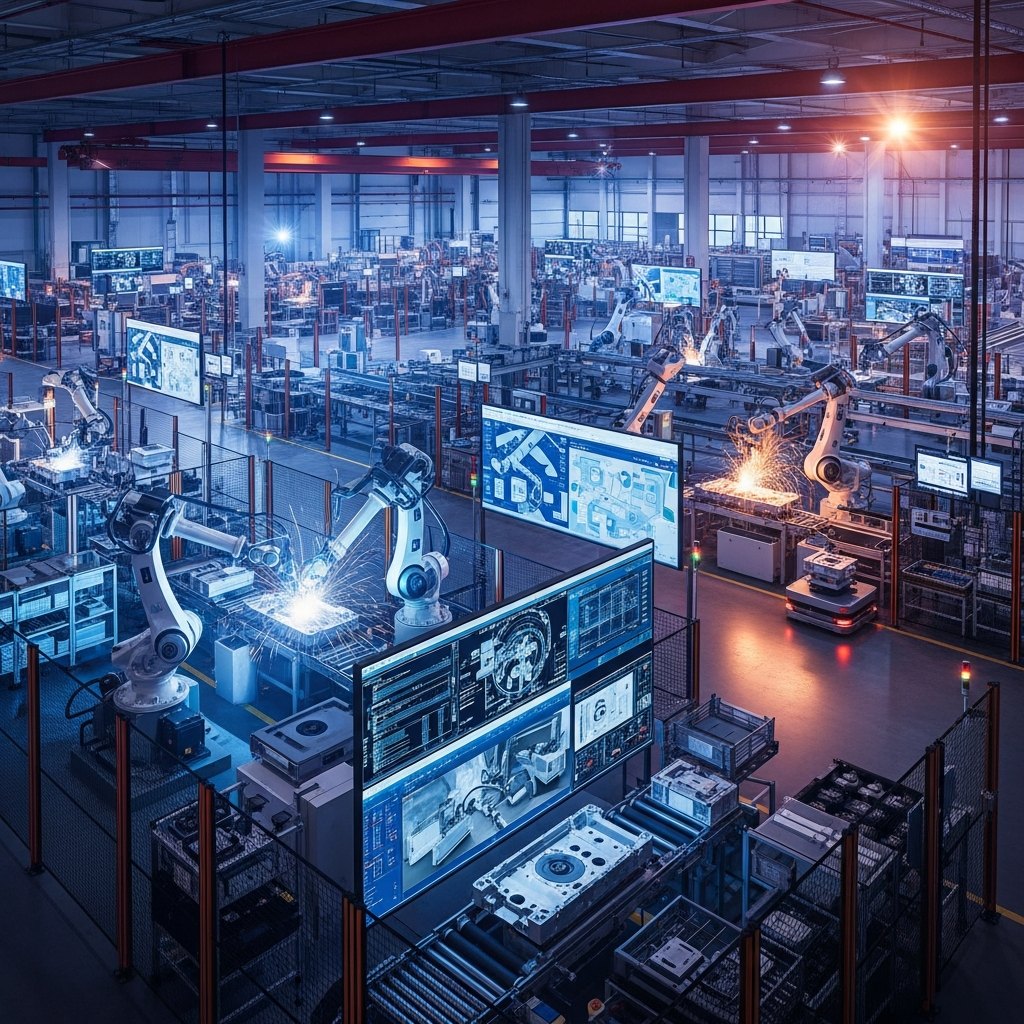
AI-Powered Quality Control: Detecting Product Defects at 1000 Products/Minute

In the intensely competitive landscape of the 2026 manufacturing market, ensuring product quality is not just a matter of survival but also a key to building brand reputation and maximizing profits. Traditional quality control methods are often costly, slow, and prone to errors due to human factors. That's why artificial intelligence (AI) is becoming a revolution in this field, especially in detecting product defects on the production line.
Benefits of AI-Powered Quality Control
AI-powered quality control offers significant advantages over traditional methods:
- Superior Speed: AI systems can inspect hundreds, even thousands, of products per minute, far exceeding human capabilities. With inspection speeds of up to 1000 products/minute, businesses can significantly increase productivity and reduce waiting times.
- High Accuracy: AI can detect the smallest defects that humans may not be able to recognize, ensuring consistent product quality and minimizing defect rates.
- Reduced Costs: Although the initial investment cost may be high, AI helps reduce labor costs, minimize waste due to defective products, and optimize the production process in the long run.
- Learning and Adaptation Capabilities: AI systems can continuously learn from new data and improve their defect detection capabilities over time. This helps businesses quickly adapt to changes in the production process and customer requirements.
- Continuous Operation: AI can operate 24/7 without fatigue or performance degradation, ensuring a continuous and stable quality control process.
Applying Deep Learning for Automated Visual Inspection
Deep learning, a branch of AI, is being widely used in automated visual inspection. By using deep neural network models, the system can be trained to recognize product features and accurately detect defects. This process includes:
- Data Collection: Collect a large number of product images, including both standard and defective products.
- Data Labeling: Label each image, indicating specific defects (if any).
- Model Training: Use the labeled data to train the deep learning model.
- Deployment and Testing: Deploy the trained model on the production line and test its performance.
- Continuous Improvement: Continuously collect new data and use it to improve the model, ensuring the highest accuracy and efficiency.
AIVision Solutions: Elevating Production Quality
AIVision is proud to provide AI-powered quality control solutions in Vietnam. We offer comprehensive solutions, from consulting, design, and implementation to system maintenance, helping businesses optimize their production processes and improve product quality.
AIVision's solutions use advanced deep learning technology, customized to suit specific industries and production processes. We are committed to providing our customers with effective, reliable, and easy-to-use solutions.
Key features of AIVision solutions:

- Detects a variety of defect types: scratches, cracks, dimensional errors, missing components, etc.
- Easy integration with existing systems.
- Intuitive, easy-to-use interface.
- Detailed reports to help businesses monitor and improve production processes.
- 24/7 technical support.
Conclusion
AI-powered quality control is an inevitable trend in modern manufacturing. With its ability to detect defects quickly, accurately, and continuously, AI helps businesses improve product quality, reduce costs, and enhance competitiveness. Contact AIVision today to discover how AI can help you elevate your production quality!
Contact AIVision for a free consultation: