AI Camera for Industrial Parking: Lessons from the Field
03/10/2026
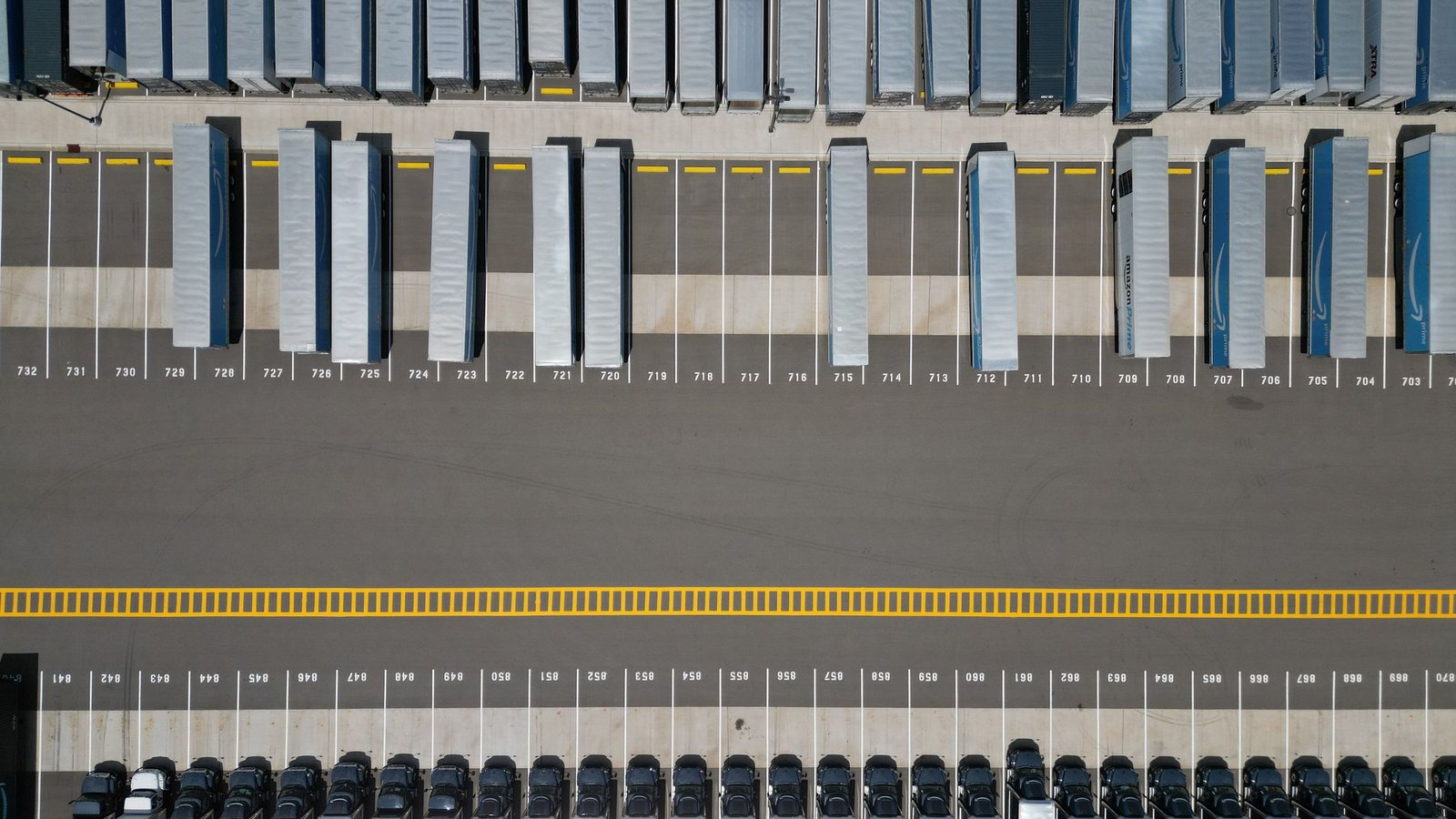
Lessons from a 5,000-Space Lot
I still remember that hot August afternoon, standing at the corner of an industrial park in Binh Duong. The head of maintenance pointed toward the parking lot, which handled tens of thousands of trucks daily, and said: "The security team can't keep up, they constantly miscount, but standard cameras only record footage that nobody watches." That was when we started the project with a single AI camera mounted at a high vantage point, covering the entire area. The goal was simple: count vehicles entering and exiting, recognize license plates, and detect improperly parked vehicles. We didn't need complex algorithms on paper; we needed a stable computer vision system that worked in heavy rain and harsh sun.
Angle and Lighting: The Number One Enemies
The most common mistake when deploying AI cameras is trusting the technical specifications in the catalog. We once encountered a case where a 4K camera was installed too far away, causing truck license plates to occupy only a few pixels. As a result, the license plate recognition model performed inconsistently; a single character error invalidated the entire result. The real consequence was that the system was deemed "unreliable," leading other departments to stop using this data for logistics planning.
- Mistake: Choosing a camera based solely on resolution while ignoring focal length and focusing capability at long distances.
- Consequence: The license plate recognition accuracy dropped below 85% at night.
- Fix: Use a camera with a varifocal lens, position it closer, or divide the observation area using multiple cameras instead of relying on a single "hero" camera.
The lighting issue was equally challenging. Shadows from warehouse buildings created deep dark zones, while LED floodlights caused glare. Computer vision requires consistent data to function well. We had to adjust white balance and enhance contrast at the hardware level before the data reached the processing software.
The Trade-Off Between Speed and Accuracy
Many businesses require the system to respond instantly, in under one second, to direct trucks into empty spaces. This places significant pressure on the algorithm. In our first project, we prioritized speed by reducing the complexity of the neural network. The system was very fast, but it frequently confused trucks with containers when they were parked side by side. Users complained that the system "miscounted" whenever large vehicles entered the lot.
We had to sit down and change our strategy. Instead of optimizing everything for speed, we separated the processing into two streams: a fast stream for counting vehicles and issuing alerts, and a slower but more accurate stream for license plate recognition and vehicle classification. This was a necessary trade-off. The average response time increased to about 1.5 seconds, but accuracy improved to a level acceptable for operational management. The lesson here is that you should not impose a single metric on all functions of an AI Camera.
Developing Models for Vietnamese Conditions
Training data is the backbone of computer vision. Pre-built models on the international market are often trained on license plates following Western standards. When applied to Vietnamese trucks, with their variations in color, dirt, and angles, the error rate skyrocketed. We had to collect thousands of real-world license plate images from the client's own parking lot to fine-tune the model. This process is time-consuming but mandatory. A model that achieves 90% accuracy on clean data will fail completely in a dusty, vibration-heavy industrial environment.
We also realized the importance of continuous monitoring. An AI camera is not a "set it and forget it" device. Weather, dust accumulating on the lens, or seasonal lighting changes all degrade performance. We established an automatic weekly image quality check mechanism that reports immediately when image quality drops due to dust or blur. This allows the maintenance team to know when to clean the cameras without needing manual inspections.
The Next Step for Smart Surveillance Infrastructure
Deploying AI cameras for parking lots is not just about installing hardware. It is a continuous process of fine-tuning between technology and operational reality. We have partnered with many businesses domestically and internationally, from factories in Vietnam to distribution centers in Mexico and the Philippines, to prove that AI Cameras are only truly useful when they solve a specific pain point, rather than just being a trendy tech feature.
The question we often ask partners after a project goes live is: How many hours of manual work has this system saved you, and do you trust its data enough to make financial decisions? If the answer is no, perhaps we need to reconsider our approach, rather than just focusing on upgrading the hardware.
If your business needs a free AI Office tool that runs on-premise, try Vtraks or talk to AIVISION for deployment consultation.