AI Camera Deployment Checklist for Multi-Contractor Sites
09/11/2026
The Biggest Risk Isn't the Hardware
Many project owners and management boards assume the biggest barrier to installing AI cameras on construction sites is the cost of equipment or replacing legacy camera systems. In reality, after years of consulting on major infrastructure projects in Vietnam and neighboring markets like Thailand and the Philippines, I've found that the true bottleneck lies in operational processes and coordination among stakeholders. Construction sites are unique, with dozens or even hundreds of subcontractors working in parallel. Each unit has its own safety standards, different construction schedules, and distinct personnel management methods.
Applying computer vision to safety monitoring isn't just about installing a few cameras and waiting. It requires meticulous preparation in data and processes. If not done correctly from the start, the system will remain a passive recording device, failing to deliver real value for risk management. This article provides a practical checklist, distilled from field deployment experience, to help you avoid common pitfalls.
Data Preparation and Monitoring Zones
Before activating the system, you must clearly define what needs to be monitored. This is the most time-consuming part but yields the highest long-term effectiveness.
- Define restricted areas and hazardous zones: Construction sites contain numerous hazardous areas such as deep excavations, active crane zones, or flammable material storage. You must clearly map these zones on technical drawings. The key reason: Without clearly defined restricted zones, the AI Camera cannot distinguish between a legitimate worker and an unauthorized intruder, leading to false alarms.
- Categorize monitored subjects by group: Regular employees, subcontractors, visitors, and transport vehicles all need to be differentiated. For example, Subcontractor A's workers are only permitted in Zone 1, while Subcontractor B's are in Zone 2. This categorization allows the system to detect specific zone violations rather than just flagging the presence of an unknown person.
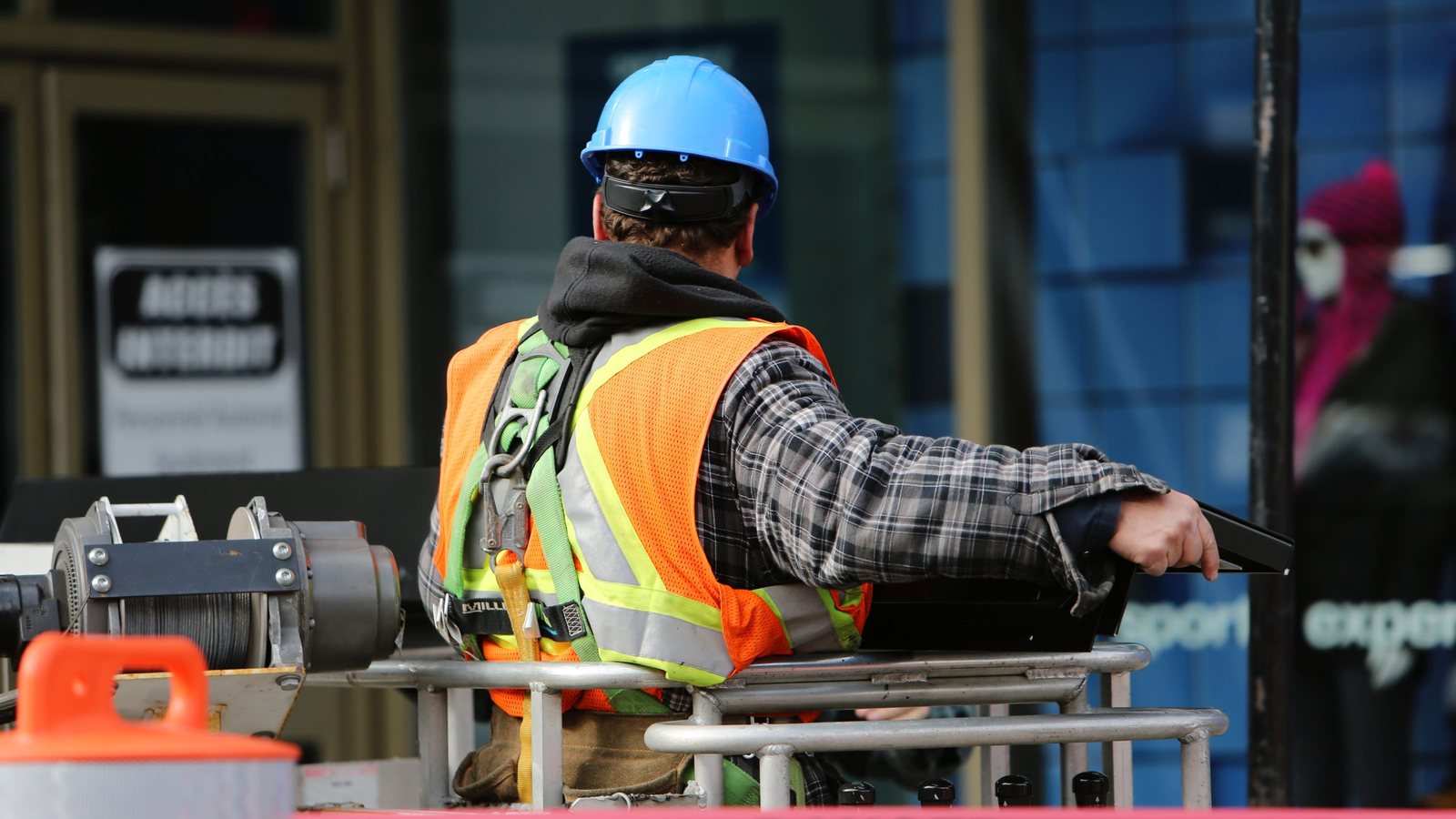
- Set Personal Protective Equipment (PPE) recognition standards: Each subcontractor may wear different uniforms. The system must be configured to recognize specific types of hard hats, high-visibility vests, or safety boots. This is crucial because a white helmet from Subcontractor A might be flagged as a violation if not configured correctly, even if it is the standard for Subcontractor B.
Integration with Operational Workflows and People
Technology is only effective when it is integrated with people. This is the aspect projects often overlook, leading to ignored alerts or delayed responses.
The on-site operations team must be trained on how to react to AI Camera alerts. A restricted zone intrusion alert is not just a notification on a screen; it is an event requiring immediate action. You need to establish a process: Who receives the alert? Who verifies it? Who has the authority to cut power or stop machinery? Without this process, safety officers will be overwhelmed by hundreds of daily alerts, and critical warnings will be missed.
Furthermore, a feedback mechanism with subcontractors is essential. When a worker violates safety regulations, the subcontractor must be notified to discipline or retrain their staff. If only the project owner holds the data, relationships between parties will become tense and lack transparency. Systematic sharing of alert data helps raise overall safety awareness.
The Role of Technical and IT Teams
The IT team is responsible for ensuring system stability and security. Construction sites often have weak network infrastructure, limited bandwidth, and dusty, humid environments. This is a significant challenge for any AI camera system.
Selecting an AI camera solution requires considering edge computing capabilities. Instead of sending all video data to a central data center, processing critical events at the camera or a nearby gateway reduces bandwidth load and ensures immediate response. AIVISION, with its experience deploying for major enterprises in Vietnam, often recommends this approach to ensure low alert latency, suitable for the strict safety requirements of the construction industry.
Additionally, data security is a sensitive issue. Workers' facial data is personal information. Storing and processing this data must comply with data protection regulations. The IT team must configure the system to store only necessary data, auto-delete it after a set period, and strictly control access rights. This is not just a legal requirement but also a matter of trust from workers to the project owner.
Frequently Asked Questions
Can AI Cameras replace safety officers?
No. AI Cameras are a support tool, helping safety officers focus on more complex issues and monitor multiple areas simultaneously. They cannot replace human judgment and incident handling in emergencies.
Is the deployment cost high?
Costs depend on the site size and number of cameras. However, compared to the cost of a serious labor accident or delays, investing in safety monitoring technology usually yields clear economic benefits. You should calculate based on ROI (Return on Investment) rather than just the equipment purchase price.
How long does deployment take?
An average site can be deployed in a few weeks. However, true effectiveness is achieved when the system is tuned and operational processes are established, usually taking an additional 1-2 months after installation.
Applying the Checklist in Meetings
Instead of general safety discussions, bring this checklist to project kick-off meetings or periodic reviews with subcontractors. Require each party to confirm they understand the restricted zones, PPE standards, and alert response processes. Written commitments from subcontractors create positive pressure, minimize violations, and enhance monitoring effectiveness. Technology is only one part; close coordination between people and processes is the key to the success of AI Camera safety monitoring projects.
If you are weighing up a similar project, our team can help you scope it before you spend anything. See what we build or book a conversation.