5 Display Scoring Mistakes That Cost Sales Teams Control
30/09/2026
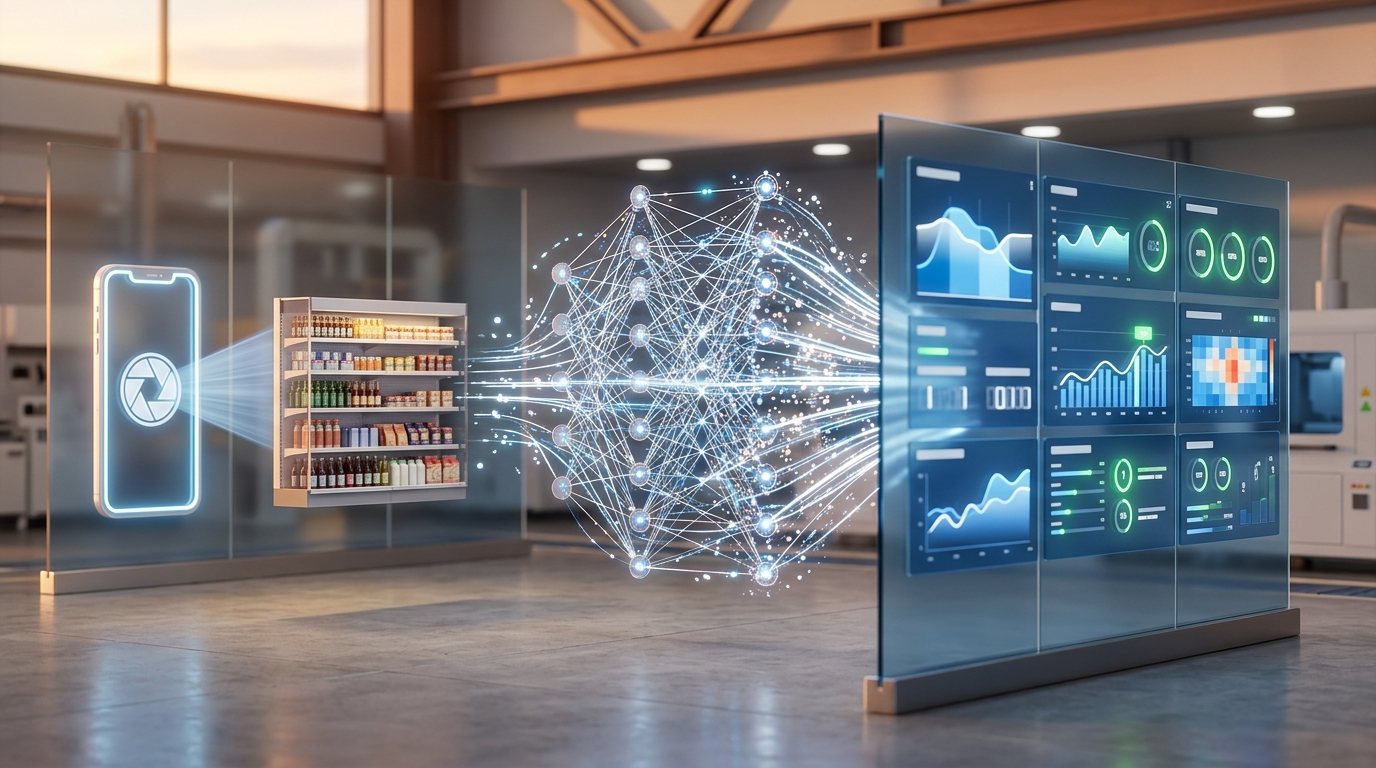
Many sales managers believe that simply collecting enough photos from the field is sufficient. They expect an AI Visibility system to instantly turn those images into accurate data. Reality is different. Data often arrives late, or is accurate but not in time for critical decision-making.
Waiting for Reports Instead of Acting Immediately
This is the most costly mistake in terms of lost opportunities. When the sales team takes photos in a store at 9 AM, if the system takes 24 hours to process and return display scoring results, the information is already obsolete. The product may have been sold out or its display position replaced by a competitor.
The consequence is that leadership makes decisions based on past data. Adjusting promotional policies or restocking inventory always lags behind reality. With a processing speed of 5,000 images per second, AIVISION operates with a committed latency of under one second, completely eliminating this gap. You can look at cases like Masan or major lubricant corporations, where response speed is a critical factor in the supply chain.
Prioritizing High Resolution Over Speed
Many businesses try to use flagship phones to capture extremely high-resolution photos, assuming that AI needs the finest details possible. This creates heavy files that are difficult to transmit over unstable mobile networks in remote areas or air-tight warehouses.
The result is a technical barrier that hinders the workflow. Sales staff are reluctant to take multiple photos due to fear of device lag or network loss. When data is incomplete, the accuracy of AI Vision becomes zero. The solution is not to upgrade hardware for staff, but to use algorithms capable of fast processing and bandwidth optimization.
The Trade-off Between Detail and Speed
The technical challenge is always a trade-off. You can have 99.7% accuracy but lose 5 minutes per image, or process in 0.5 seconds but miss small details. For display tracking, the most important details are presence and position, not the exact color of packaging at 400% magnification.
Lack of Standardized Input Data
This mistake silently reduces overall data quality. Each sales representative takes photos differently: tilted angles, dim lighting, or wide shots that make products appear small. Without clear guidelines, AI struggles to identify objects.
The consequence is an increased error rate in recognition, requiring manual human intervention to fix mistakes. At that point, operational costs double compared to manual work. Prevention involves establishing standard shooting procedures and using mobile apps like Vtraks to guide shooting angles and check image quality on-site before uploading to the server.
Ignoring CRM Integration
Many businesses view AI Visibility as a standalone display monitoring tool. They receive reports but do not link that data to actual sales performance. As a result, management does not know the correlation between product visibility and revenue.
This turns AI Vision into an expensive "black box." Data sits idle in Excel spreadsheets instead of flowing into the customer relationship management system. You need deep integration to turn display scores into specific performance indicators (KPIs) for each employee.
How to Connect?
Use APIs to push score data to the CRM in real time. Each time an employee updates a photo, the system automatically records and scores it, then logs it in the customer interaction history.
Measuring the Wrong Metrics
Businesses often only measure image processing speed while forgetting decision-making speed. A system may process quickly, but if the reporting interface is complex, managers still cannot act fast. The mistake lies in evaluating the technology rather than the workflow.
The most important metric is not the number of images processed, but the time from detecting a display issue to the warehouse or sales staff responding. If this time is still several days, no matter how fast the technology is, it is meaningless. Measure the change in behavior of the field team.
Currently, processing 10 million images per month with 99.7% accuracy is the technical standard, but the biggest challenge remains human. You need to train your team to understand that the speed of data arrival directly affects their bonuses. Technology is only the hardware of the solution; a data-driven work culture is the software that determines success or failure.
Vtraks is AIVISION's app that brings AI Camera, AI Visibility, and AI Office together in one place. Try it on the App Store, or read more articles by AIVISION.