Planogram in Retail: Optimizing Display with AI Technology
02/07/2025
What is Planogram and Why is it Important?
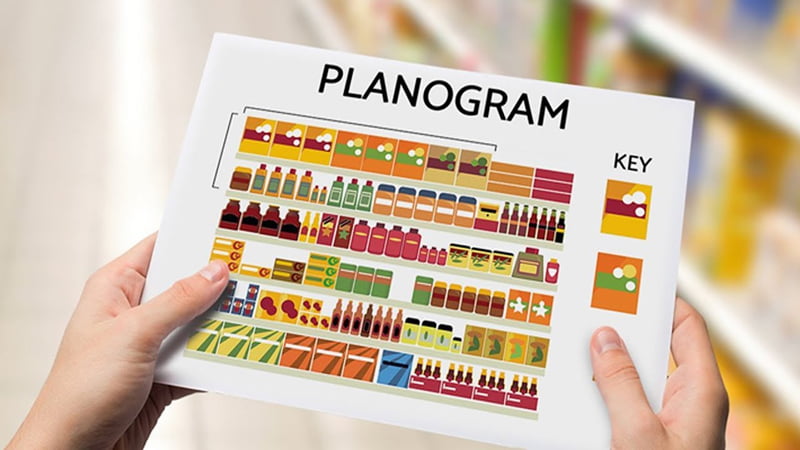
In today's fiercely competitive retail landscape, optimizing display space is not just an art but a science. Planogram (POG) is precisely this scientific tool - a product placement diagram on shelves designed according to sales optimization principles.
Planogram is not simply about arranging products randomly, but a meticulously calculated process based on sales data, consumer behavior, and consumer psychology. It's a diagram that describes how to arrange products horizontally and vertically, positioning by product lines, brands, sizes, and colors to create an optimal shopping experience.
Strategic Objectives of Planogram
Enhancing Brand Recognition
Planogram helps brands occupy the "golden real estate" at points of sale - eye-level positions and areas with the highest customer traffic. Proper product placement not only increases recognition but also creates an impression of professionalism and brand credibility.
Driving Product Consumption
By applying consumer psychology principles, planogram helps stimulate impulse buying and increases average order value. Placing new products near best-selling SKUs or creating complementary product "zones" all contribute to driving sales.
Efficient Inventory Management
Planogram also serves as a smart inventory management tool, helping businesses control product flow, minimize dead stock, and optimize capital turnover.
Stakeholders in the Planogram Ecosystem
The success of a planogram program requires close coordination between three main parties:
Manufacturers: Provide product data, brand strategy, and display support budget.
Distributors: Act as intermediaries, implement POG deployment, and manage relationships with retail points.
Supermarkets/Retail Outlets: Execute planogram at sales points and provide feedback on actual effectiveness.
Implementation Process of Planogram-Based Sales Programs
1. Data-Driven POG Design
The first and most crucial stage is comprehensive data analysis including:
- Historical sales data
- Customer traffic analysis
- Consumer behavior research
- Demographic characteristics of the area
2. Implementation Team Training

Sales and display teams need thorough training on:
- POG display standards
- Product arrangement techniques
- Merchandising principles
- Handling special situations
3. Clear Reward and Penalty Policies
A transparent incentive system is crucial motivation:
- Special discounts for POG-compliant outlets
- POSM support (posters, shelves, price tags)
- Display bonuses (e.g., $300/month)
- Non-compliance handling policies
4. Monitoring and Reporting Systems
Monitor actual implementation through:
- Field staff conducting reality checks
- Regular image reporting systems
- Digital tools and mobile applications
- Independent third-party audits
5. Continuous Evaluation and Improvement
After each 1-3 month cycle, perform:
- Sales growth analysis
- Program ROI effectiveness evaluation
- Feedback collection from retail points
- POG adjustment and optimization
Technology Revolution: AI Display Tracking
Challenges of Traditional Methods

Previously, planogram monitoring relied mainly on human resources, leading to many limitations:
- High costs for monitoring teams
- Inability to check 100% of retail points
- Subjectivity in evaluation
- Lack of real-time data
- Difficulty in scaling up
AI Display Tracking Solution
Modern AI technology has brought breakthrough solutions with capabilities:
Automatic Product Recognition: The system can accurately identify SKUs with 95-99% accuracy, distinguishing sizes, packaging, and different variants.
Display Position Analysis: AI can determine exact product positions on shelves, evaluate planogram compliance with 90% accuracy and latency of only <2s.
Price Recognition: The system automatically reads and validates pricing information, detecting pricing errors with 99% accuracy.
Size-Based Product Classification: Ability to distinguish and classify products by size with 90% accuracy.
Planogram Recognition: Overall assessment of POG compliance and improvement suggestions.
Panorama Processing: Analysis of entire display space through panoramic image stitching with 95% accuracy.
Real-World Example: POG Program Success
A leading beverage company applied planogram combined with AI tracking for convenience store systems with impressive results:
Display Strategy:
- Main brand products placed at eye-level
- Best-selling SKUs positioned at center, easily accessible
- New products placed near core product areas
- Complete POSM support and $300/month bonus for compliance
Results Achieved:
- 25% sales increase at POG-compliant outlets
- 40% reduction in audit and monitoring time
- 60% increase in display reporting accuracy
- Program ROI reached 300% after 6 months of implementation

Comprehensive Benefits of Planogram for Businesses
Increased Market Coverage and Brand Control
Planogram helps businesses maintain consistent presence at all retail points, creating strong brand presence and consistent brand recognition.
Reduced Waste and Inventory Optimization
Through strict control of product position and quantity, businesses can significantly reduce dead stock and manage inventory more efficiently.
Increased Repeat Order Capability
When retail points see clear effectiveness from POG compliance, they will proactively place orders and maintain long-term relationships.
Valuable Data Insights
AI tracking systems provide valuable data on consumer behavior, SKU effectiveness, and market trends.
The Future of Planogram with AI
AI technology is opening new possibilities for planogram:
Predictive Analytics: Predicting planogram effectiveness before actual deployment.
Dynamic Planogram: Automatically adjusting POG based on real-time data and seasonal trends.
Personalized Display: Customizing displays according to demographics and preferences of each area.
IoT Integration: Combining with IoT sensors to track customer interaction with products.
Conclusion
Planogram is no longer optional but has become a necessity in the retail 4.0 era. The combination of traditional planogram with AI tracking technology creates a complete ecosystem, helping businesses optimize sales effectiveness and enhance customer experience.
Investment in planogram systems and AI tracking is not just about keeping up with trends but also a long-term strategy for businesses to maintain competitive advantage in an increasingly fierce retail market.
Planogram success requires commitment from all participating parties, from manufacturers to final retail points. Only when everyone works toward common goals can planogram fully realize its potential and create sustainable value for the entire retail ecosystem.
👉 Contact US via website https://aivgroups.com
Whatsapp: +65 8730 6506
Email: contact@aivgroups.com
#RetailTech #AI #Planogram #RetailInnovation #DigitalTransformation #RetailOptimization #ArtificialIntelligence #RetailAnalytics #SmartRetail #TechInnovation #DisplayTracking #POG #RetailAutomation #ComputerVision #MachineLearning #RetailSolutions #StoreOperations #RetailEfficiency #FutureOfRetail #RetailData